How Craftsmanship Impacts the Longevity of a Garden Building
.webp)
Many British homes today include some form of timber garden building. Whether it is a garden room, a log cabin, or a garden annexe, they have become a more familiar part of how space is used around the home.
What has changed is not just how many there are, but how they are used. These spaces are no longer occasional. In many cases, they become part of everyday life, evolving into a natural extension of your lifestyle.
This is not just a passing trend; the demand for garden buildings has been growing steadily. Recent data shows the global garden buildings market is growing at a CAGR of 5.23%, with the UK ranking among the top countries worldwide.
From what we see at London Timber Buildings, a well-built timber garden building can last for decades. The difference is rarely the idea or the design; it is usually the craftsmanship behind it.
Whether it is a garden room, a log cabin, or a garden annexe, the same thing tends to matter once you start using it properly. So, how well do they actually last?
What Affects the Lifespan of a Garden Building
Most garden buildings look good at the start. Straight lines, fresh timber, everything feels solid enough. It is after a couple of winters that things begin to show. Often, it is small changes, such as how the doors sit, how the room feels in colder weather, and whether things still feel tight and stable.
That is usually where build quality starts to show itself. This is usually the point where differences between types of garden building start to become clearer, especially with garden rooms.
Garden Rooms and Everyday Use
Internal Build and Flexibility
With garden rooms, a lot of it comes down to how the internal space has been put together.
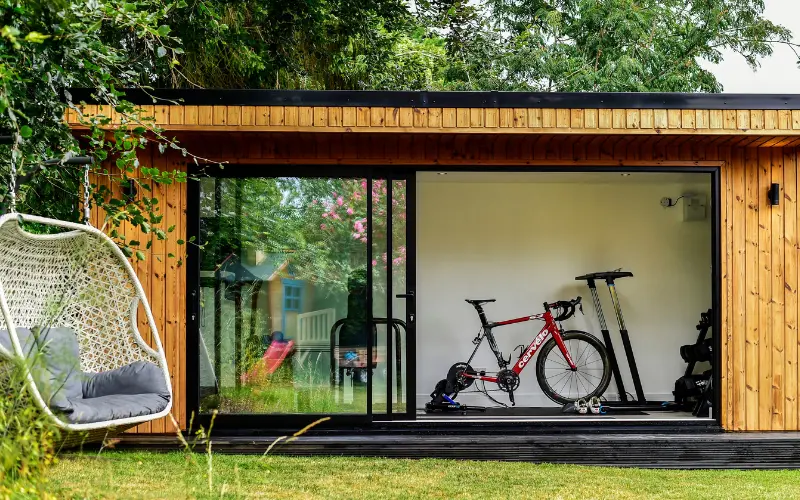
At LTB, our garden rooms include a full plaster finish as standard. This not only looks great, but it also contributes to ensuring the room stays warm.
Where people need something more practical, we can line sections in 12mm ply and reinforce the structure behind it. That makes it easier to use the space properly, whether for shelves, tools, or storage, without worrying about the walls.
Most people end up using their garden room more than they expected. It rarely stays as an “occasional” space for long.
Windows, Doors, and Detailing
For doors and windows, we offer both aluminium and uPVC options. What tends to matter is not the material, but how they have been installed. If those edges are not sealed correctly, issues will show over time.
With the unpredictable UK weather, these areas get tested fairly quickly. When they are done properly, you do not really notice them, which is usually a good sign.
For a lot of homeowners, a garden room ends up feeling more like an extension of the house than something separate. That is usually when you start to notice how well it has actually been built.
Once the inside is right, attention tends to shift to how the building handles the outside conditions.
Cladding and Weather Resistance
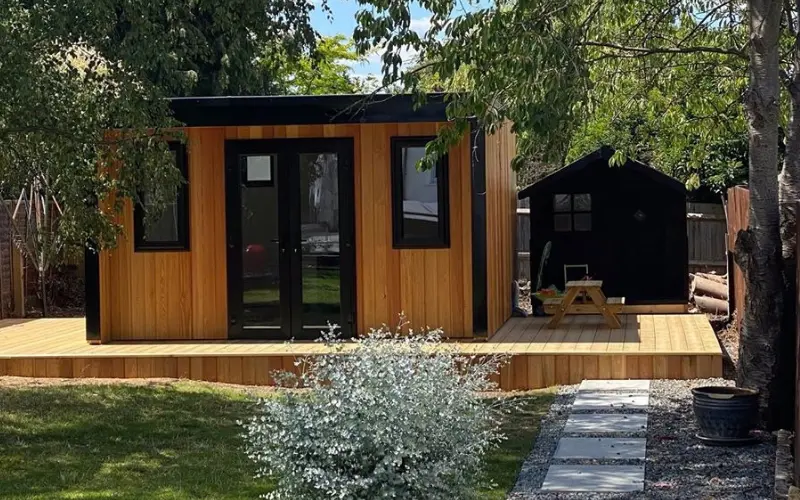
Our garden rooms come with thermowood cladding as standard. This helps handle moisture well and stays relatively stable through changing weather. Other options, such as composite or rendered finishes, are also available, and the same principle applies across all of them.
The material matters, but it is usually the installation that causes issues later. If boards are too tight or joints are not quite right, that is where problems tend to start.
Decking and Ground Conditions
We include around 500mm of decking as standard, which helps create a clearer transition between the building and the garden. It also plays a role in how water is managed around the entrance.
Timber decking is pressure-treated for durability. Hardwood options like Yellow Balau last well in exposed areas, while composite offers a lower maintenance alternative.
In practice, what matters most is drainage. Poor drainage around the entrance is something we see fairly often, and it tends to affect the building over time.
The same principle applies across other types of garden building, although it is handled slightly differently with log cabins.
.webp)
Log Cabins and Structural Strength
Wall Thickness and Insulation
With log cabins, more of the performance comes directly from the structure itself.
Thicker logs, such as 44mm or 70mm, create a more solid build and help retain heat more effectively. Twin skin systems allow insulation within the wall, which improves year-round use.
The difference is not always obvious at first, but it becomes clearer after the first winter.
Base and Roofing
The base plays a key role in how well a log cabin performs over time.
We often recommend an eco-base system, as it allows airflow beneath the structure and helps prevent moisture build-up. For heavier use, a concrete base may be more suitable.
For roofing, systems like EPDM rubber membranes tend to perform well long-term when installed correctly.
This is usually where things begin to differ more when compared to garden annexes.
%20(1).webp)
Garden Annexes and Long-Term Living
Layout and Everyday Use
Garden annexes are designed for regular use, so the layout becomes more important.
We can adapt internal walls and layouts depending on how the space will be used, whether that includes separate rooms, kitchens, or bathrooms.
When this is planned properly from the start, the building tends to feel more natural to live in.
Services and Finishes
Electrics and internal finishes are considered part of the overall build, rather than added later.
We work with homeowners to plan how the space will function day to day, not just how it will look.
Cladding options such as thermowood, composite, or fibre cement are then selected based on performance and maintenance expectations.
.webp)
What You Can Expect Over Time From Your Garden Building
In practical terms, we would expect our garden rooms to have a life expectancy of over thirty years, with a ten-year structural warranty as standard, on our garden rooms.
That figure is useful as a guide, but what matters more is how the building performs over time. A well-built structure should remain stable, comfortable, and easy to maintain, with only minor upkeep needed.
A Practical Way to Look at Longevity
It is easy to focus on how a garden building looks on day one. Most of them look good at that stage. A better way to think about it is how it performs after a few winters and how it handles regular use.
Most are planned as occasional spaces. In reality, they tend to become part of everyday life, which is when build quality starts to matter.
If you are thinking about adding a garden building and want to understand what will work best for your space, it can help to talk things through early. Speak to our team at London Timber Buildings, and we can guide you through what to consider before you build.
.webp)
